At the University of Queensland (UQ), Australia, the School of Communication and Arts’ Centre for Communication and Social Change (CfCSC) devotes itself to understanding communication as a participatory process of listening, amplifying voices, and facilitating social change.
Under the leadership of its director, Dr. Elske van de Fliert, the centre became a hub of transdisciplinary research. Van de Fliert brought nearly two decades of field experience across Asia, Africa, and beyond, leading projects in countries like Indonesia, Vietnam, China, Sri Lanka, the Philippines, Kenya, and Uganda.
Between 2014 and 2016, CfCSC led a Swiss Agency for Development and Cooperation‑funded pilot alongside the Mongolian Green Gold rangeland restoration program. Over three years, CfCSC-supported Rural Communication Services (RCS) initiatives extended to more than 21,000 herder families directly, and an additional 43,000 indirectly. Pastoral families engaged in collective learning, reshaping livestock practices, forage preservation, and small-scale enterprise as they are empowered through participatory communication to work collectively on land management and sustainable livelihoods.
It was this initiative that sparked discussion and drew academic attention at international conferences in India, the Netherlands, and Canada, where CfCSC helped place Communication for Rural Development on the global stage. During a research seminar in April 2017 titled “Strategising communication and collective action towards sustainable nomadic livelihoods (Mongolia),” van de Fliert and colleagues reflected on blending information provision with dialogue and the co‑creation of knowledge in culturally rooted and institutionally complex contexts.
RCS involves in-depth listening and open dialogue to create the groundwork for sustainable change. This principle drives a broader Global Research Initiative (GRI) for Rural Communication, which brings together UQ CfCSC with the Food and Agriculture Organization of the United Nations, Wageningen University and Research, the University of Guelph, University of Reading, Van Hall Larenstein University of Applied Sciences, and the University of the Philippines Los Baños. GRI focuses on mainstreaming ComDev across global development efforts. Its first delivered output was a FAO-commissioned study titled “Evidence-based approaches for rural communication services” under CfCSC’s coordination.
Moreover, CfCSC contributes to UQ’s Energy & Poverty Research Group to explore sustainable energy transitions in South Asia, and co-leads initiatives like PEATLI in Indonesia, an engagement-based transdisciplinary learning project focused on peatland communities.
Looking ahead, GRI is laying foundations for capacity development such as mapping e‑learning Go‑Dev modules and exploring creation of a global PhD course in partnership with FAO and Perugia. They are also creating resources like textbooks and virtual learning environments, organising scholarly fellowships, and convening experts through conference panels. According to Van de Fliert, these collaborations “provide a unique opportunity for academics and practitioners across the world to share experiences and models for rural communication implementation and evaluation.”
On the education front, UQ distinguishes itself as Australia’s only university offering a dedicated field in Communication for Social Change within its Master of Communication program. That field delves into the theories and practices of participatory media engagement, driven by coursework such as Participatory Development Communication, Community Informatics, and Communication and Social Movements . Alongside theory, students gain hands-on experience through practicum placements that might involve crafting communication strategies, facilitating stakeholder workshops, or conducting participatory needs analyses with NGOs and government agencies.
CfCSC also crafts the curricula by mentoring students who undertake thesis work tied closely to ongoing field projects, this ranges from rural livestock markets to rural media strategies. Many graduate with prospects as international aid officers, community development managers, policy consultants, or health-promotion specialists
Since its establishment in 2007, CfCSC continues to grow its portfolio of transdisciplinary research from Indonesia and Vietnam in the early years, to Timor-Leste between 2012–2015, expanding to Mongolia, and continuing with cattle-farmer initiatives and peatland work in Indonesia up to the present. Throughout this, CfCSC has remained committed to the Sustainable Development Goals by empowering marginalized communities through dialogue and shared action.
Source: https://communication-social-change.centre.uq.edu.au
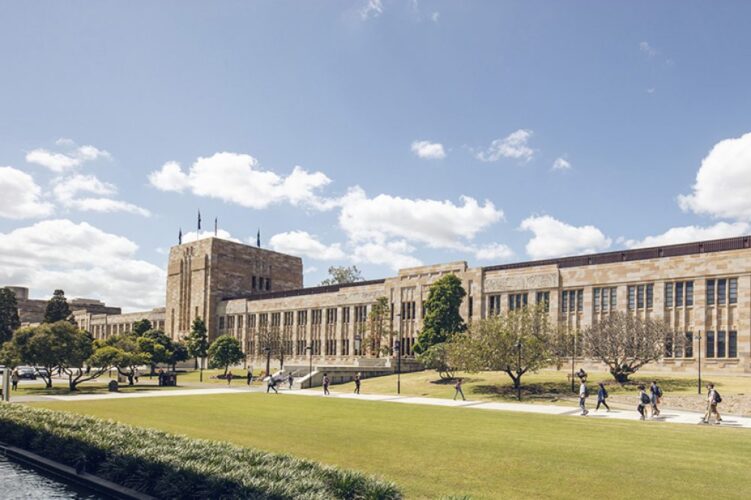
Photo from WikiData.
Article contributed by Maria Soledad, CCComDev intern.
Comments are closed, but trackbacks and pingbacks are open.