Resources

Community Media: A Good Practice Handbook

[2011] This is a collection of case studies of good practice in community media – understood as independent, civil society based media that operate for social benefit and not for profit. Community media provide with access to information and voice, facilitate community-level debate, information and knowledge sharing and input into public decision-making. The handbook looks at the enabling environment for community media to flourish (section 1), sustainability issues (section 2)
Development Communication Sourcebook

[2008] This sourcebook makes the case about the importance of incorporating communication from the onset of development policies and practices, as a necessary ingredient to enhance sustainability and avoid the failures of the past. It intends to offer a broader conception of communication, including other purposes and functions than the usual ones. Communication for Development goes beyond raising awareness, informing, persuading, or changing behavior. It is also about listening, exploring,

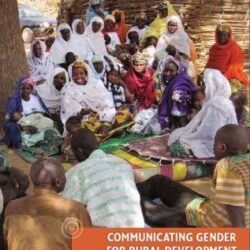
Communicating Gender for Rural Development

[2011] The FAO-Dimitra is a  participatory information and communication project which contributes to improving the visibility of rural populations, women in particular. Communicating Gender for Rural Development presents the project experience in using communication for development to enable the most marginalised groups, including women, to take ownership of their development and achieve economic and social empowerment. Capacities for harnessing the full power of this approach are fairly limited and there

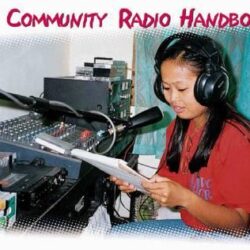
Community Radio Handbook

[2001] This handbook is meant to help different communication actors, technicians, operators and radio producers to make more efficient use of community media for local development by getting people involved. It aims to demonstrate that starting a small radio station is not as expensive and complex as most would think and is actually within the reach of almost any community. The handbook covers legal and technical aspects and sets out

How to Do Community Radio

[2002] This primer for community radio operators builds on the experience of Tambuli (Tinig ng Aming Munting Bayan Upang Umunlad Ang Maliliit or the Voice of the Community), an independent community radio in the Philippines which in the past ten years has grown from one community radio to a network of 25 stations. Often located in remote rural areas, these stations are “operated in the community, for the community, about

Participatory Communication. A Practical Guide

[2009] This publication is an easy-to-read introduction to current concepts and practices of development communication. The first chapters present the main conceptual approaches to development communication and develop the principles of participatory communication. The authors describe 4 phases of the communication programme cycle in the context of development cooperation, including the participatory communication assessment (PCA), the communication strategy design, the implementation and the monitoring and evaluation. The final part presents

Empowerment Radio (foreword & index)

[2012] ‘EMPOWERMENT RADIO – Voices building a community’ sets out to demonstrate why community radio during the past decade has repeatedly been recommended as a powerful catalyst for development – ‘the missing link’ between development support being provided and change actually taking place. This book has been written with a desire to share powerful insights and experiences that can help get a genuine community radio off the ground – and

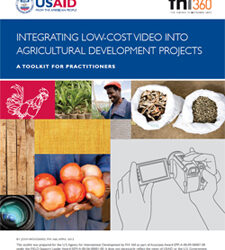
Integrating Low-cost Video into Agricultural Development Projects

[2012] This toolkit is designed to help projects and organizations use low-cost video to augment the traditional agricultural development activities and extension services they provide. It was developed by FHI 360 as part of the USAID project Fostering Agriculture Competitiveness Employing Information Communication Technologies (FACET). Given the increasing availability of low-cost digital video cameras and editing software – and the increasing use of video media in donor-funded agricultural development projects

Social Media Guide for Climate Change Practitioners in Africa

[2012] This Social Media Guide is intended for researchers, practitioners (from a non-governmental or community-based organisation) or information intermediaries working on development and climate change. It was developed by Africa Adapt and the International Livestock Research Institute. The purpose of this guide is to promote an increased understanding of the different types of social media and encourage their use for accessing and sharing knowledge on climate change adaptation in Africa. Offering practical advice

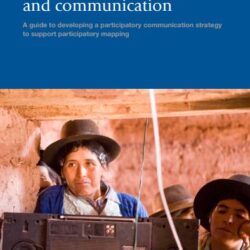
Participatory Mapping and Communication

[2010] This IFAD publication seeks to provide guidance on developing a participatory communication strategy to strengthen the impact of participatory mapping initiatives, especially among pastoralists, indigenous peoples and forest dwellers. It can also be used as a general guide for developing participatory communication strategies. The first section provides a review of participatory mapping and communication, while the second outlines a four-stage process for developing and implementing a communication strategy and action plan in support