
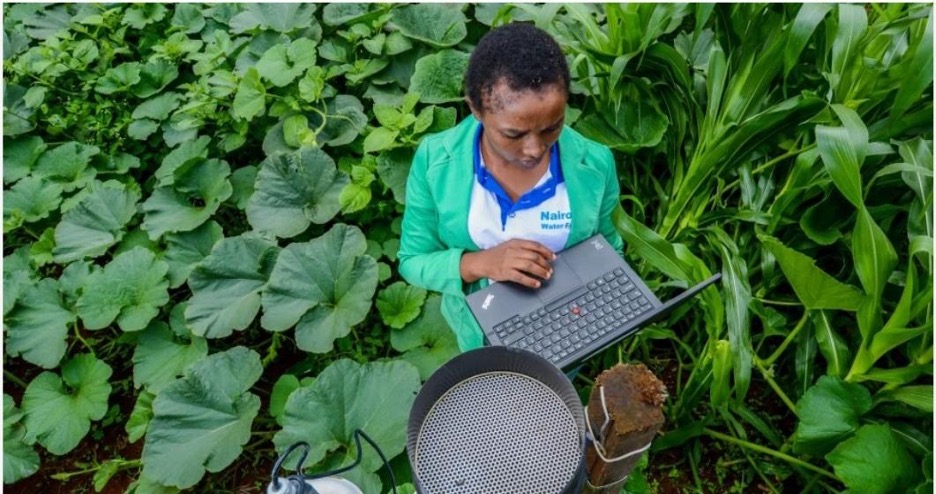
With rising populations, limited resources, and the growing threat of climate change, farmers across Africa face challenges in producing enough food sustainably. Unpredictable rainfall and degraded soil are just some of the issues that threaten their food security and livelihoods. However, technologies in Artificial Intelligence (AI) are emerging to potentially support African farmers in tackling these problems.
A preliminary study by Kinyua Gikunda of Dedan Kimathi University of Technology in Kenya explores how AI is helping African agriculture be smarter, more efficient, and more sustainable. The paper highlights how technologies like machine learning, predictive analytics, and AI-driven sensors are creating new opportunities for smallholder farmers who produce most of the continent’s food.
One key opportunity comes in the form of precision farming, where AI tools analyze real-time data on soil health, crop growth, and weather conditions to help farmers make better decisions. AI-powered sensors can identify when and where to apply fertilizer or water which reduces waste and increases yields. According to Gikunda, this smart approach not only boosts production but also conserves resources for sustainability.
AI can also be utilized for crop monitoring and disease prediction. As explained in the paper, by using satellite imagery and ground-based sensors, AI algorithms can detect early signs of pest infestations or plant diseases before they become widespread. Farmers receive alerts through their mobile phones, giving them time to act. This kind of early warning system is particularly valuable as climate change increases the risk of new and more frequent crop diseases.
Another promising area is climate-resilient agriculture. With AI’s ability to provide large amounts of climate and environmental data, it can offer location-specific advice on the best crops to plant, when to plant them, and how to manage irrigation. This empowers farmers to adapt their practices to shifting weather patterns and extreme events like droughts and floods.
According to Gikunda, despite its potential, the adoption of AI in African agriculture faces significant challenges. One of the biggest issues is infrastructure. Many rural areas lack stable internet access and reliable electricity, both of which are crucial for operating AI systems. There is also a shortage of high-quality data needed to train AI models, and many farmers have limited access to digital tools or the technical skills to use them effectively. To overcome these barriers, the study emphasizes the need for inclusive training programs and investment in rural connectivity. Gikunda argues that without addressing the digital divide, the benefits of AI will remain out of reach for the very farmers who need them most.
In spite of this, the study notes that the impact of AI on smallholder farmers is already being seen in pilot projects across the continent. AI is helping farmers access real-time market prices, make better planting decisions, and reduce crop losses. In Kenya, the Kenya Agricultural Observatory Platform (KAOP) sends weather-based advisories and farming tips via SMS to thousands of farmers. In Ethiopia, the Digital Agricultural Advisory Services (DAAS) project delivers customized guidance on livestock and crop management directly to farmers’ mobile phones.
For AI to truly serve all farmers, the study stresses the importance of ethical practices and inclusive policies. Data privacy, fairness in algorithm design, and local language support are just some of the areas that need attention. AI solutions must be tailored to the cultural and social contexts of each farming community and local voices must be involved from the start.
In the face of mounting agricultural challenges, AI is proving to be a practical tool for resilience and sustainability in African farming. With the right support, investment, and community involvement, AI could help usher in a new era of smart, inclusive, and climate-resilient agriculture across the continent.
To read more about this study, go to this link.
For more stories like this, visit cccomdev.org
Source:
Gikunda, K. (3 January, 2024). Harnessing Artificial Intelligence for Sustainable Agricultural Development in Africa: Opportunities, Challenges, and Impact. https://arxiv.org/abs/2401.06171v1
Article contributed by Maria Soledad, CCComDev intern.
Photo courtesy of Georgina Smith and retrieved from World Bank Blogs.
Comments are closed, but trackbacks and pingbacks are open.