Resources

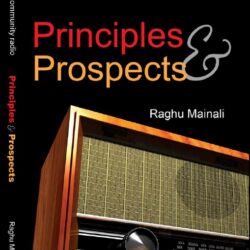
Community Radio. Principles and Prospects

[2008] In this book the journalist and community radio campaigner/expert Raghu Mainali introduces the basics of Community Radio. It is about how all those involved in community broadcasting can contribute to the maximum, by rising up to definite and desired professional standards. This book is a primer for someone who might have spent years in community broadcasting and a guide for those who aspire to take up a career in
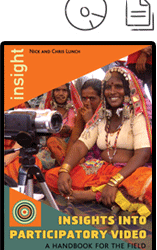
Insights into Participatory Video: A Handbook for the Field

[2006] This handbook was written by InsightShare’s directors Nick and Chris Lunch as a practical guide to setting up and running Participatory Video projects. The booklet illustrates the nuts and bolts of Participatory Video: from how to set up a new project, to the key games and activities to use. Helpful tips for the facilitator clarify how to use video for positive social change, to empower the marginalized and encourage

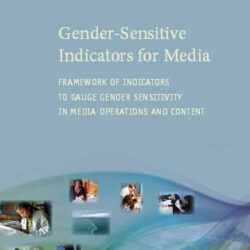
Gender-Sensitive Indicators for Media (GSIM)

[2012] The Gender-Sensitive Indicators for Media (GSIM) have been designed by UNESCO to encourage media organizations, and particularly citizens’ media, to make gender equality issues comprehensible to the public, as well as to analyze their own internal policies and practices. The aims is contributing to gender equality and women’s empowerment in and through media of all forms, irrespective of the technology used. The main focus of this publication is on

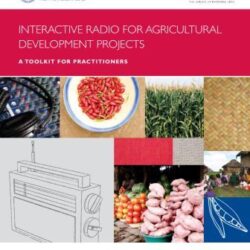
Interactive Radio for Agricultural Development Projects

[2012] This toolkit is designed to help projects and organizations use interactive radio to augment the traditional agricultural development activities and extension services they provide. It was developed by FHI 360 as part of the USAID project Fostering Agriculture Competitiveness Employing Information Communication Technologies (FACET). It aims to provide practitioners with a foundational understanding of what is needed to create compelling radio programming.Given the fact that radio continues to be

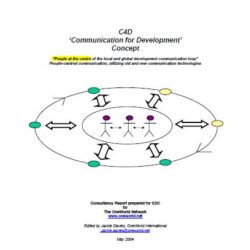
C4D ‘Communication for Development’ Concept

[2004] This discussion paper was prepared by OneWorld based on a review of and reflection on existing knowledge, approaches and trends in communication for development.  Although the main purpose is to provide inputs into the broader ICT4D conceptual framework of the Swiss Agency for Development and Cooperation (SDC), the paper summarizes on communication for development intended as “people-centred communication, utilizing old and new communication technologies, that promotes and elaborates on peoples own

Approaches to Development Communication

[2002] This collection of papers edited by Jan Servaes is part of a UNESCO/UNFPA orientation and resource kit on Development Communication. It is made up of 4 parts: I. IntroductionThree general contributions set the stage for a more detailed analysis of the issue of communication for development and social change. II. Theoretical Underpinnings of Approaches to Development CommunicationGoing through various perspectives in terms of theory, research, policy making and implementation, the contributions

Participative Marketing for Local Radio

[2003] This book addresses the issue of how to effectively market a local radio station and is especially aimed at community-owned stations. These are generally short of money but well resourced with people (mostly volunteers): a diverse resource that needs to be nurtured and managed effectively. Participative marketing is based on a strong web of relationships to help bring people together for a common purpose. It extends the idea of “relationship

Connecting ICTs to Development

[2013] This publication presents a comprehensive analysis of the key findings and lessons learned from IDRC experience with information and communication technology for development (ICT4D). The book is structured around four thematic areas:  – Introduction to ICT4D at IDRC  – Catalysing access to ICTs – Sectoral application of ICTs – ICT4D in research

Equal Access Participatory Monitoring and Evaluation Toolkit

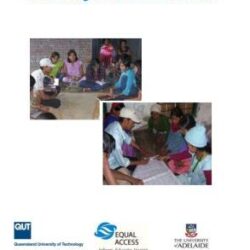
[2011] This toolkit aims to help communication for development organizations to demonstrate the impacts and outcomes of their initiatives, listen to their listeners, continuously learn, and feed this learning back into their work. It is guided by the principles of Communication for Social Change and Participatory Monitoring and Evaluation (PM&E).The toolkit comprises 6 modules:1: Effective communication, feedback and reporting systems in a PM&E process2: Setting objectives and indicators3: Research and

Communication for Agricultural Innovation in Bolivia. The challenge of institutionalization.

[2011] Sustainable agricultural innovation is a social learning process: it requires collective decisions and adaptive interactions, which gradually lead to change. Into an Agricultural Innovation System (AIS), based on dynamic networks and knowledge flows, communication plays a central role in facilitating stakeholders’ participation, negotiating between national priorities and local demands, enhancing institutional coordination and strengthening agricultural service provision. This study was carried out in the framework of the CSDI initiative and examines the